Selected work · 02
Rocket
From a prepared high-power vehicle to a launch record that includes the recovery failure.
Explore the engineering ↓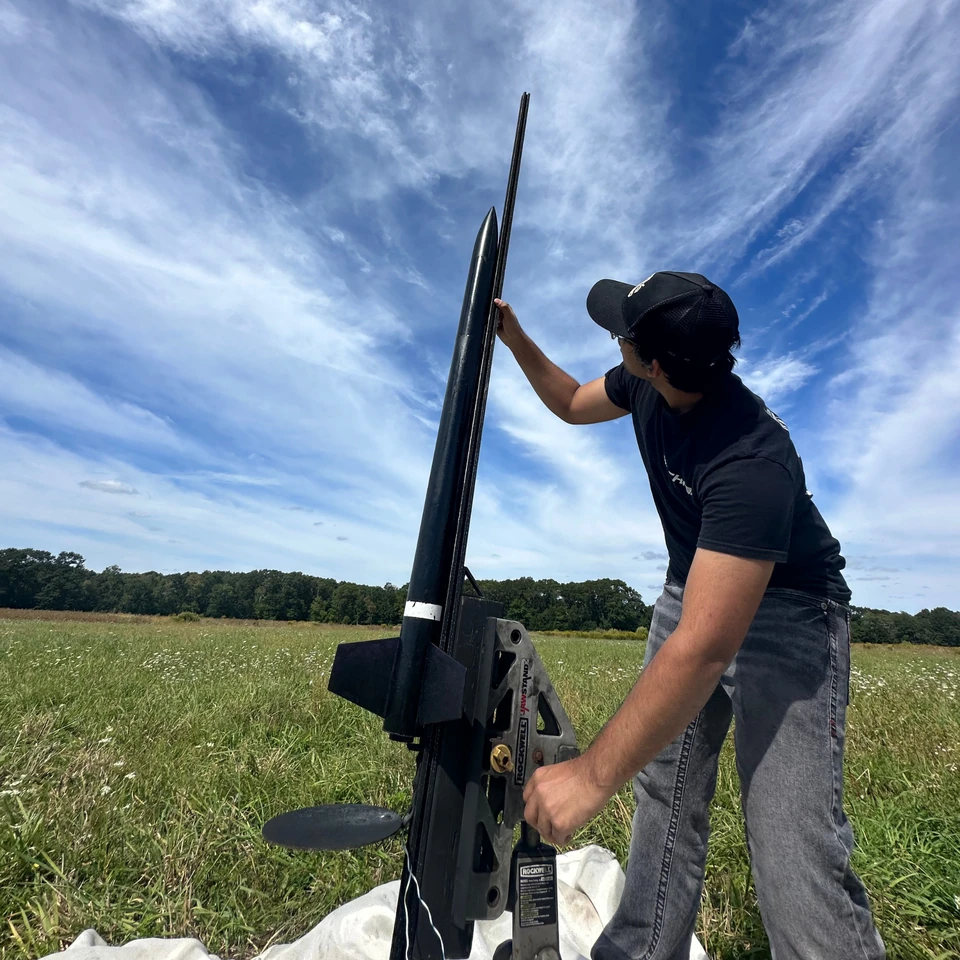
- My role
- MechaEagles founder/project manager · launch participant & fabrication
- Status
- Launched September 19, 2026 · vehicle unrecovered
- Focus
- Flight preparation · simulation · recovery
Result & scope
All three team rockets launched; two were recovered. My AeroEagle-1 ascended successfully but was not recovered after its parachute sequence failed.
- 01
Prepare
Assemble the vehicle and record the intended flight configuration.
- 02
Predict
Use OpenRocket to estimate ascent and delay behavior.
- 03
Launch
Document the observed flight separately from the simulation.
- 04
Investigate
Record the recovery failure and define the next verification work.
Evidence from the project
Inside the work.
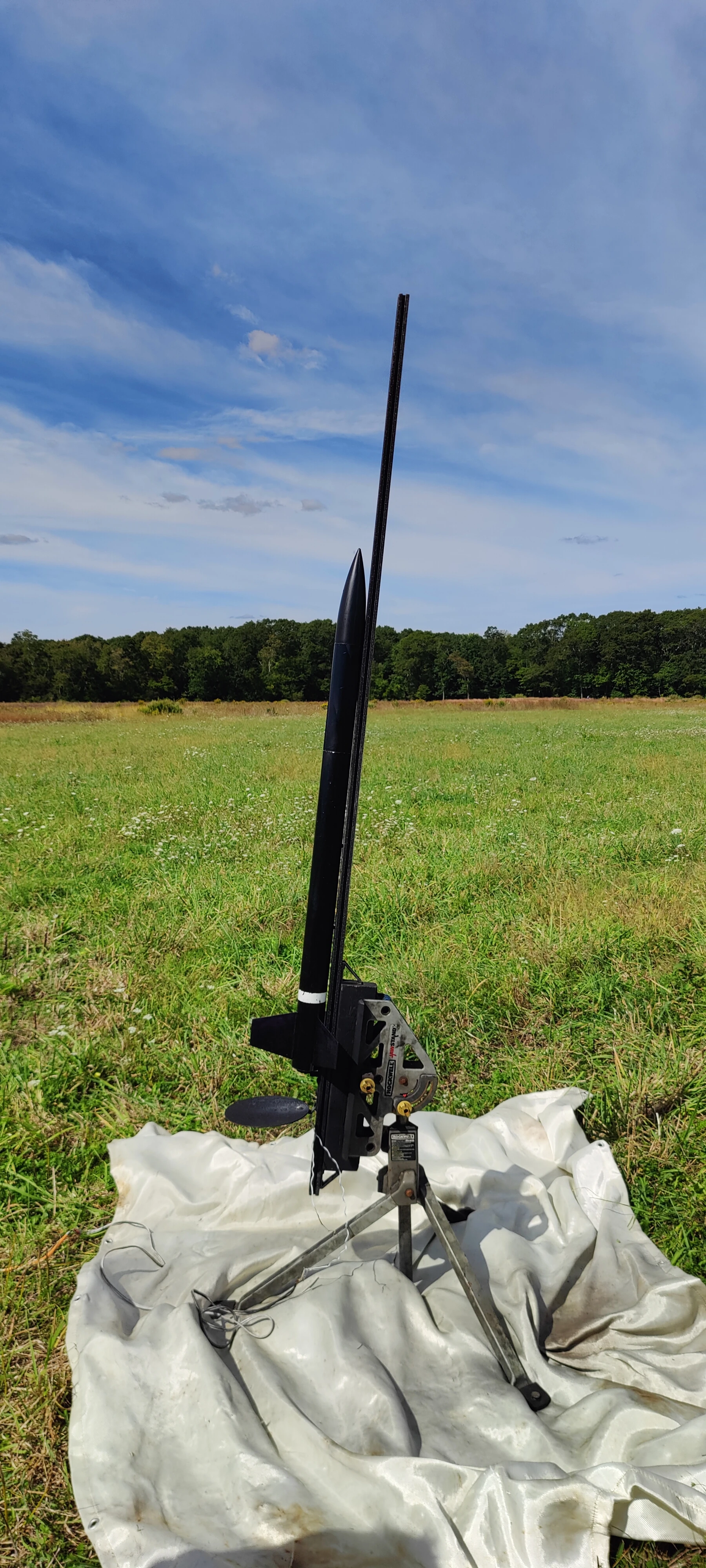
Launch-day photograph of the vehicle before flight.
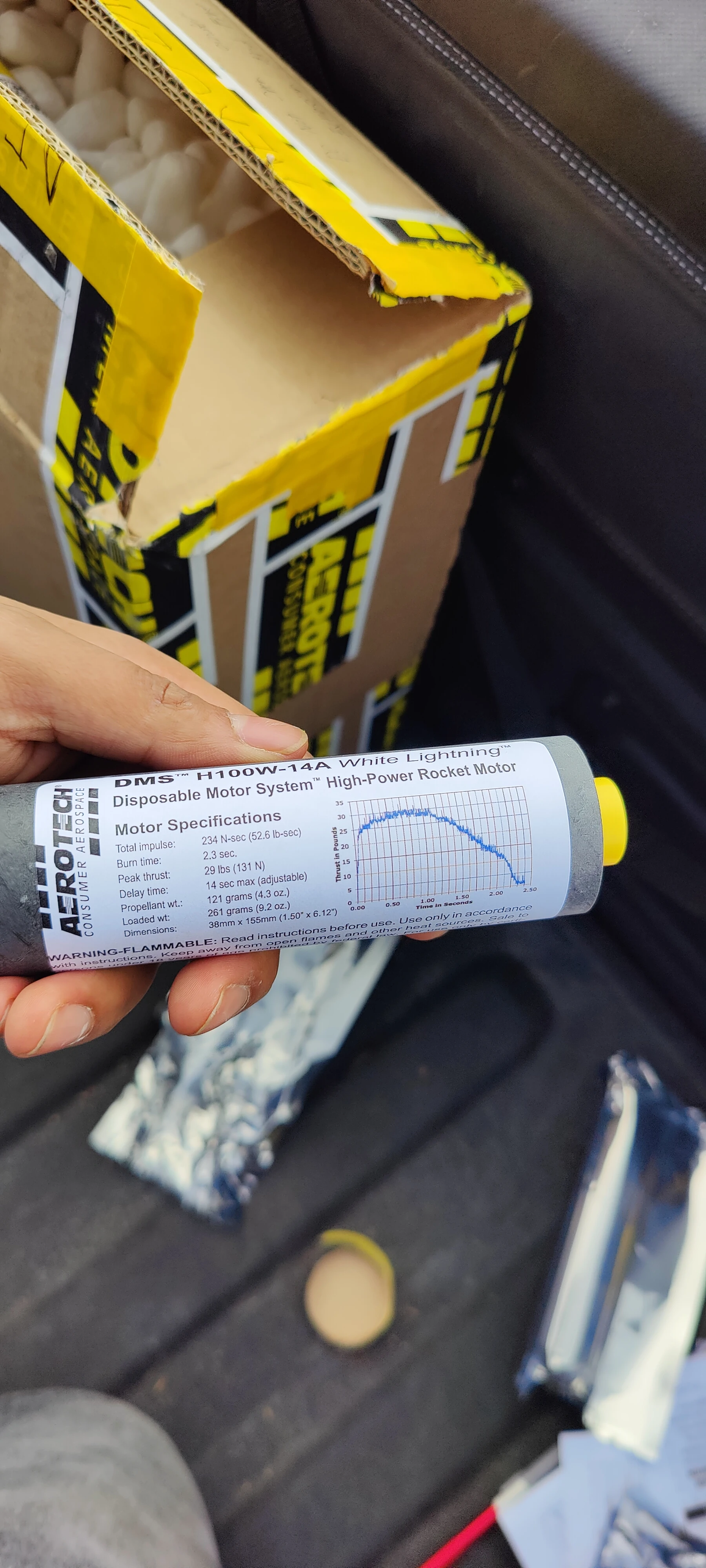
Launch-day preparation record; configuration evidence is kept distinct from flight results.
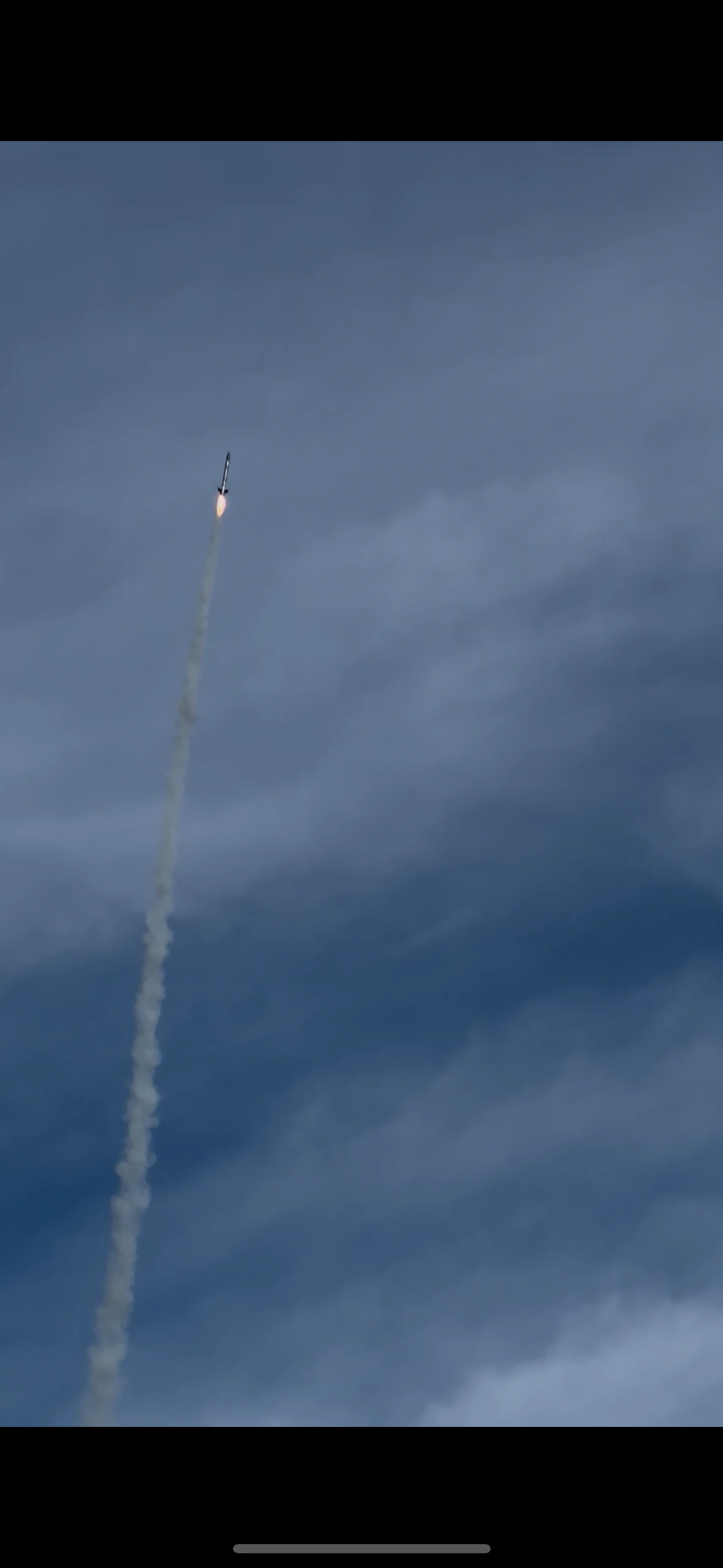
A frame supplied with the launch record. It documents ascent, not successful recovery.
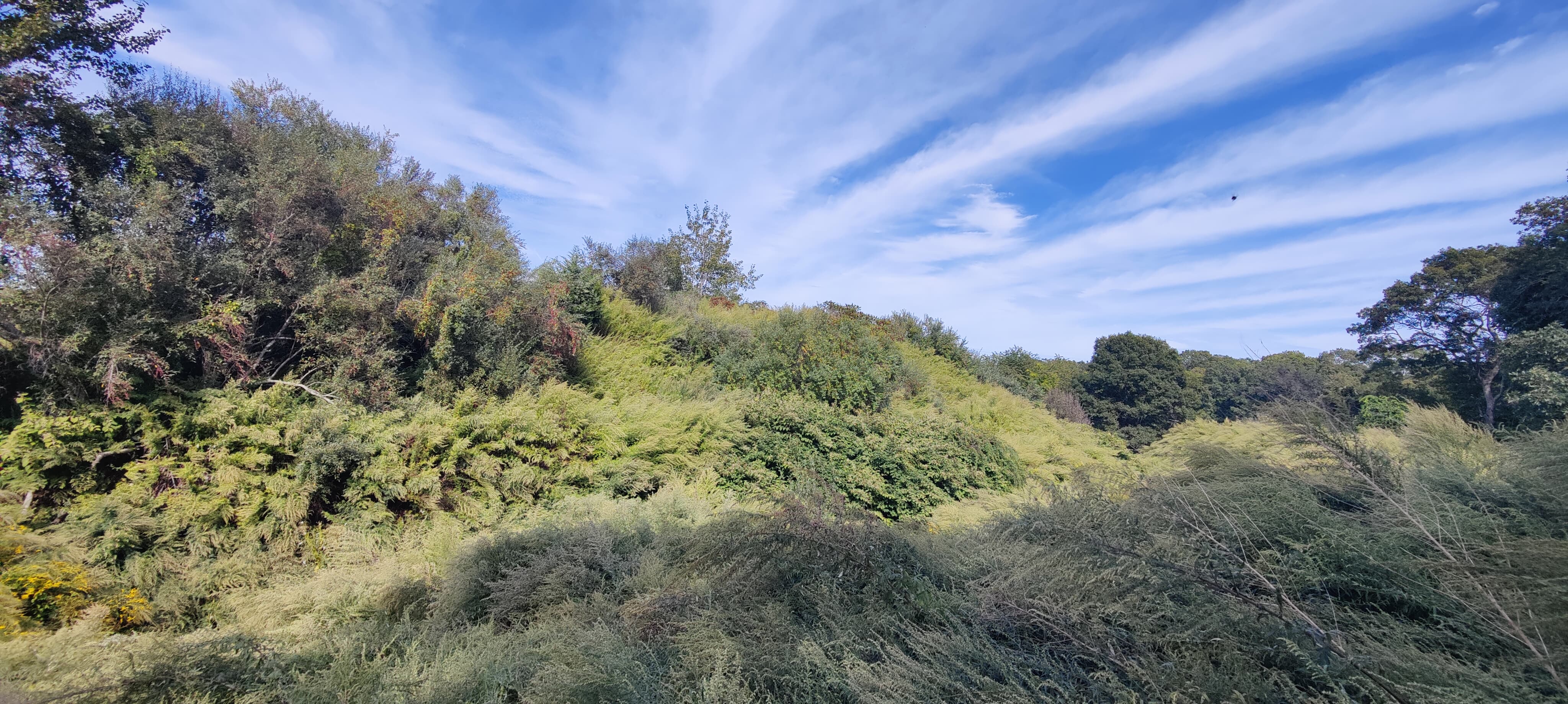
A supplied launch-day site photograph records the terrain and surrounding vegetation.
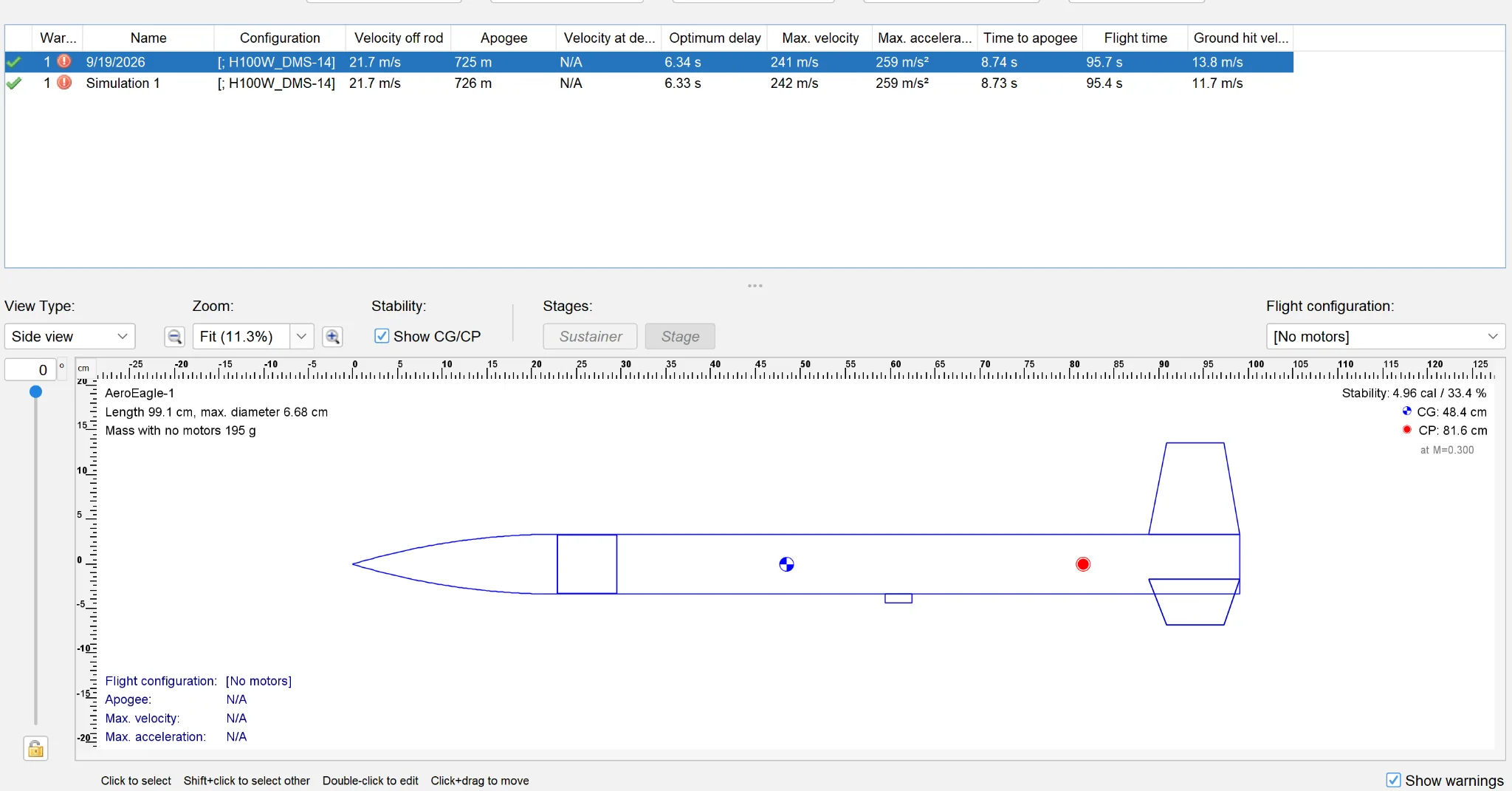
The supplied OpenRocket output records predicted performance; it is presented separately from observed flight behavior.
Recorded demonstration
Launch footage
Observed ascent from the supplied flight clip. Recovery was unsuccessful.
Press play to load the video.
| Record | Value | Evidence type |
|---|---|---|
| Flight-ready mass | ≈0.889 kg | Recalled / approximate |
| Apogee | 725 m | OpenRocket prediction |
| Peak speed | 241 m/s | OpenRocket prediction |
| Ascent | Successful launch | Observed |
| Recovery | Unrecovered | Observed outcome |
Completed flight record
The launch-day record identifies me as a founder/project manager and launch participant. My rocket, AeroEagle-1, used an AeroTech H100W motor and had a recalled flight-ready mass of approximately 0.889 kg. The team’s final count was three launched, two recovered, and one unrecovered. Another teammate’s Level 1 certification is a team milestone, not my certification.
Prediction is not telemetry
The record lists an OpenRocket predicted apogee of 725 m, predicted peak speed of 241 m/s, and time to apogee of 8.74 s. Those are simulation values. The archive does not establish a recovered altimeter log confirming the achieved altitude or velocity.
The source warns that its separate no-motor stability screenshot is not the loaded flight state; it is omitted from the evidence gallery to avoid implying flight-ready stability verification.
Recovery failure and what can be concluded
The parachute did not deploy correctly and the vehicle remained unrecovered after the search. Since the hardware could not be inspected after landing, the exact component-level failure mode remains unresolved. A strong ascent is not a successful recoverable mission.
Next verification loop
The record calls for independent checks of deployment logic, packing, trigger conditions, and recovery hardware; a measured loaded mass and center of gravity; and a tracking method. These are follow-up actions, not completed fixes.
2027 proposal is a separate phase
The supplied 2027 MechaEagles Aero proposal describes future work. Its intended mission and development plans are not evidence that the September vehicle demonstrated autonomous recovery or that the proposed system has flown.
Read the source
Technical records.
About the evidence
AeroEagles Launch Day Record, September 19, 2026, and supplied flight clip/photos. The 2027 MechaEagles Aero proposal is future work.
Continue exploring.
← Back to Selected Builds