Selected work · 06
VEX Robotics
Build it. Run it. Find what breaks. Come back better. My seasons with Team 1356, from Spin Up to Over Under.
Explore the engineering ↓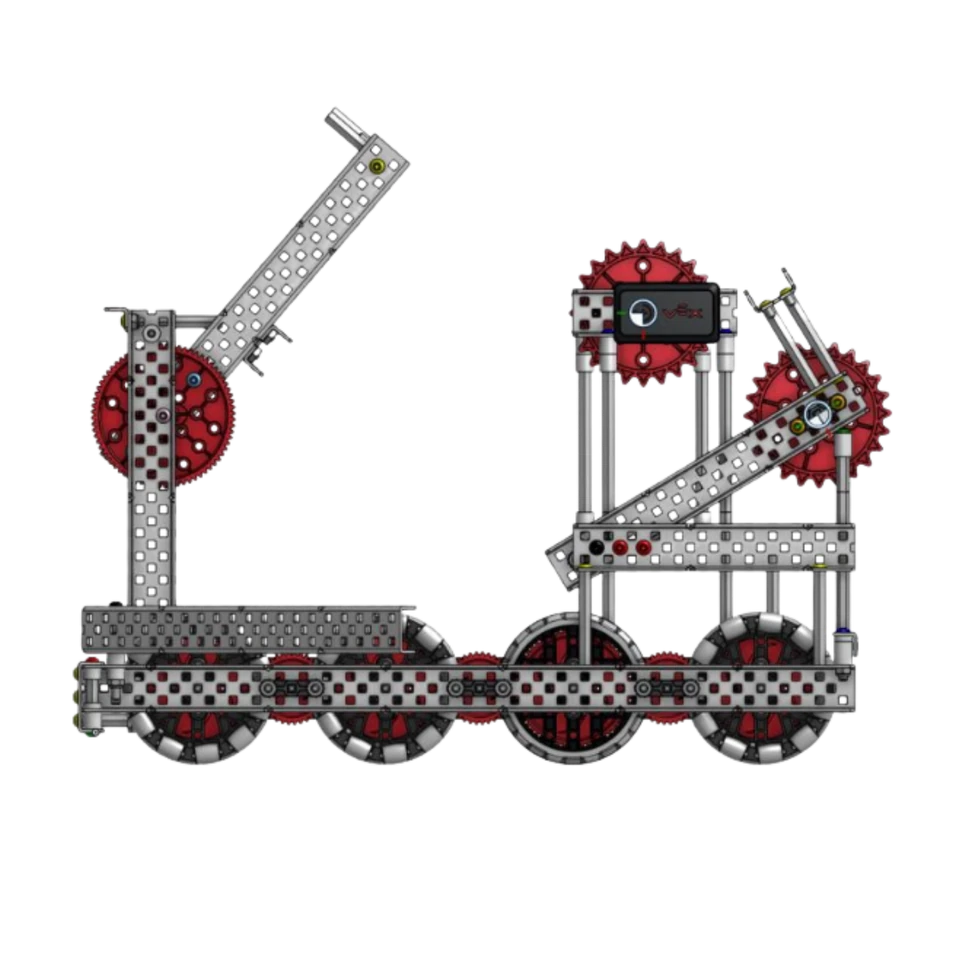
- My role
- Team 1356 co-captain · mechanical and autonomous development
- Status
- Spin Up · Over Under · Worlds
- Focus
- Mechanisms · iteration · controls
What we built
We turned CAD, prototypes, and practice runs into competition robots—and kept rebuilding as the game and our understanding of it changed. The tournament banner is a highlight. The work that got us there is the story.
- 01
Define
Translate match constraints into mechanism requirements.
- 02
Compare
Use CAD and weighted trade studies to choose a build.
- 03
Test
Exercise the mechanism and autonomous route under real constraints.
- 04
Iterate
Use competition and practice feedback to simplify the next revision.
From the workshop to the field
Inside the work.
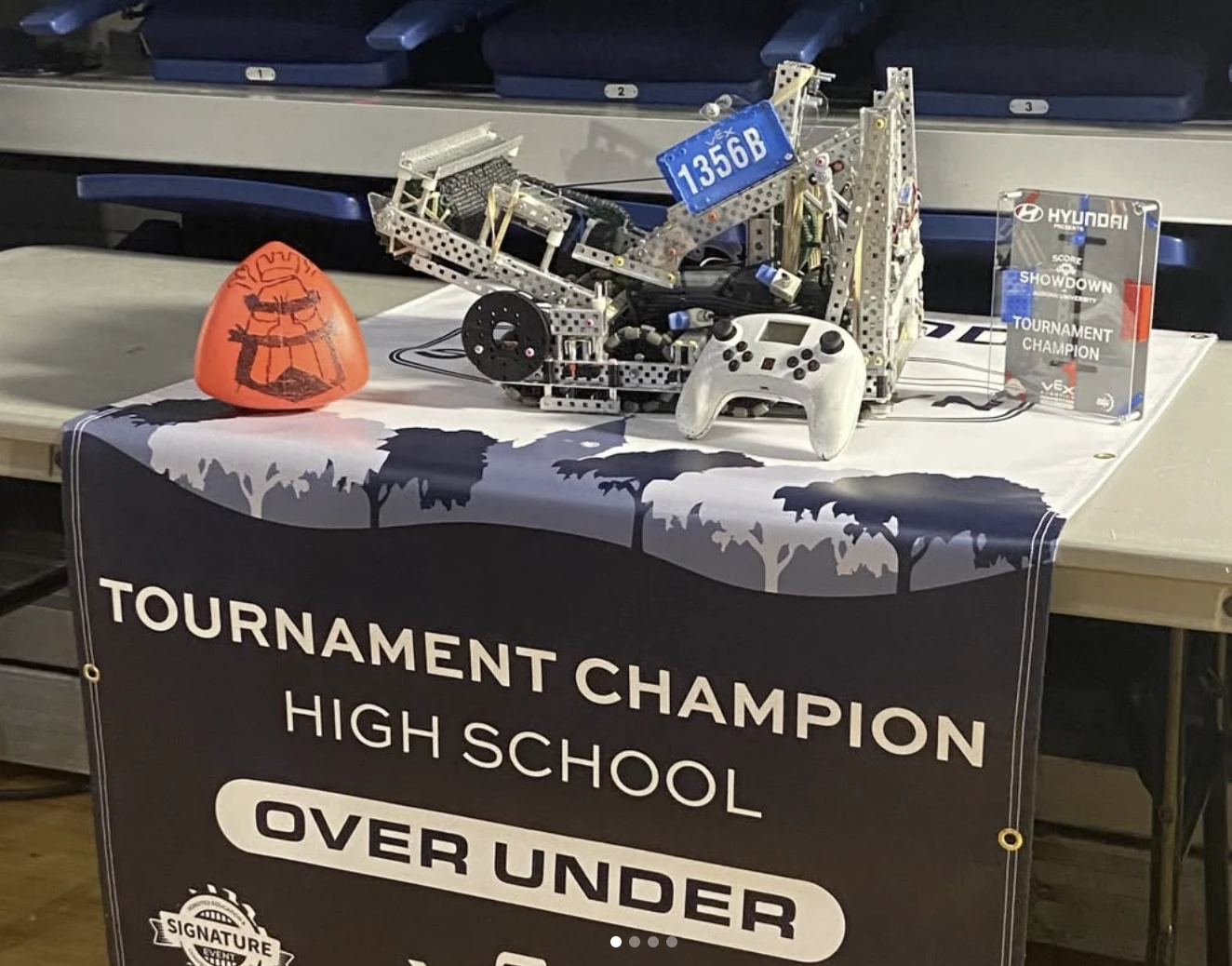
Our Over Under robot, with the banner we brought home. This one gets the first slide.
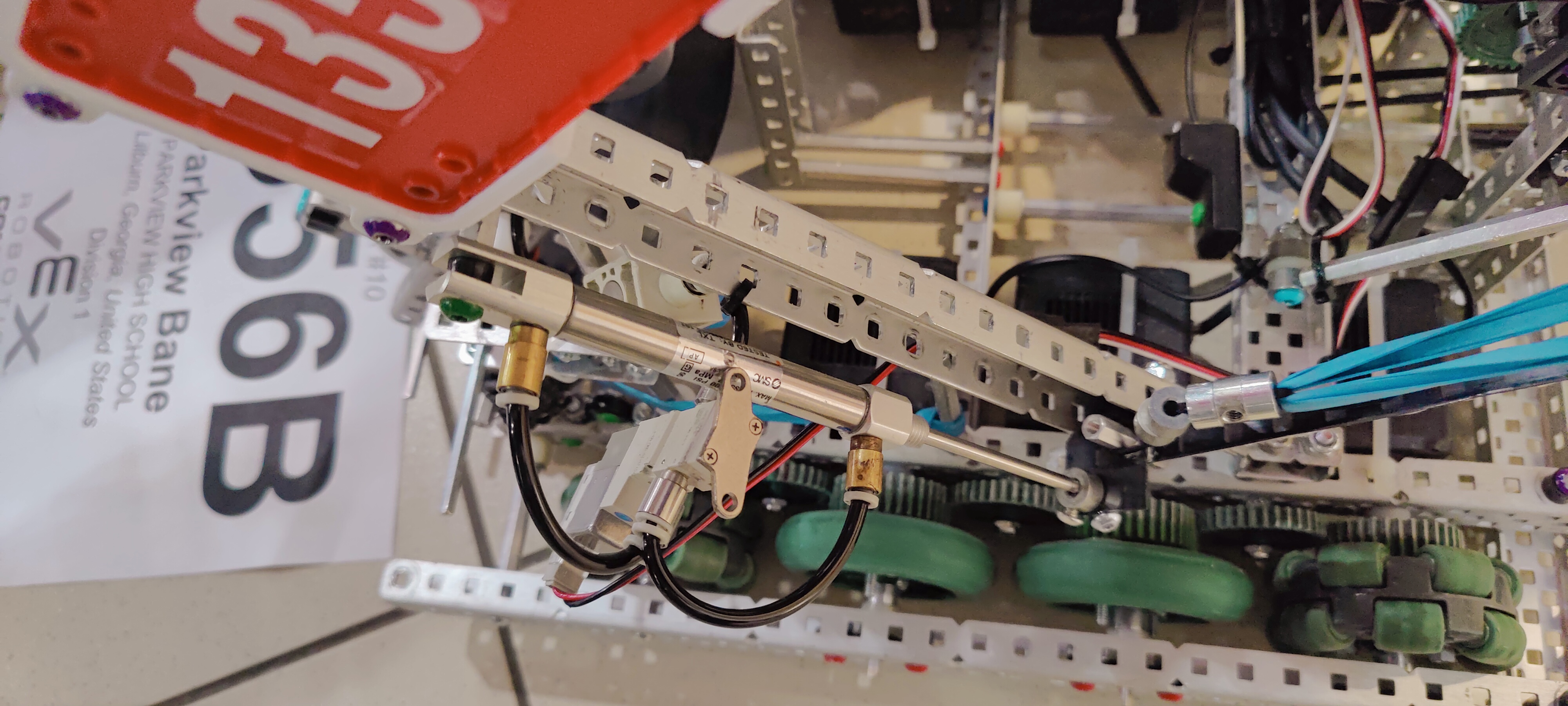
Pneumatics, linkage, elastic tension, and a lot of packaging in a small space.
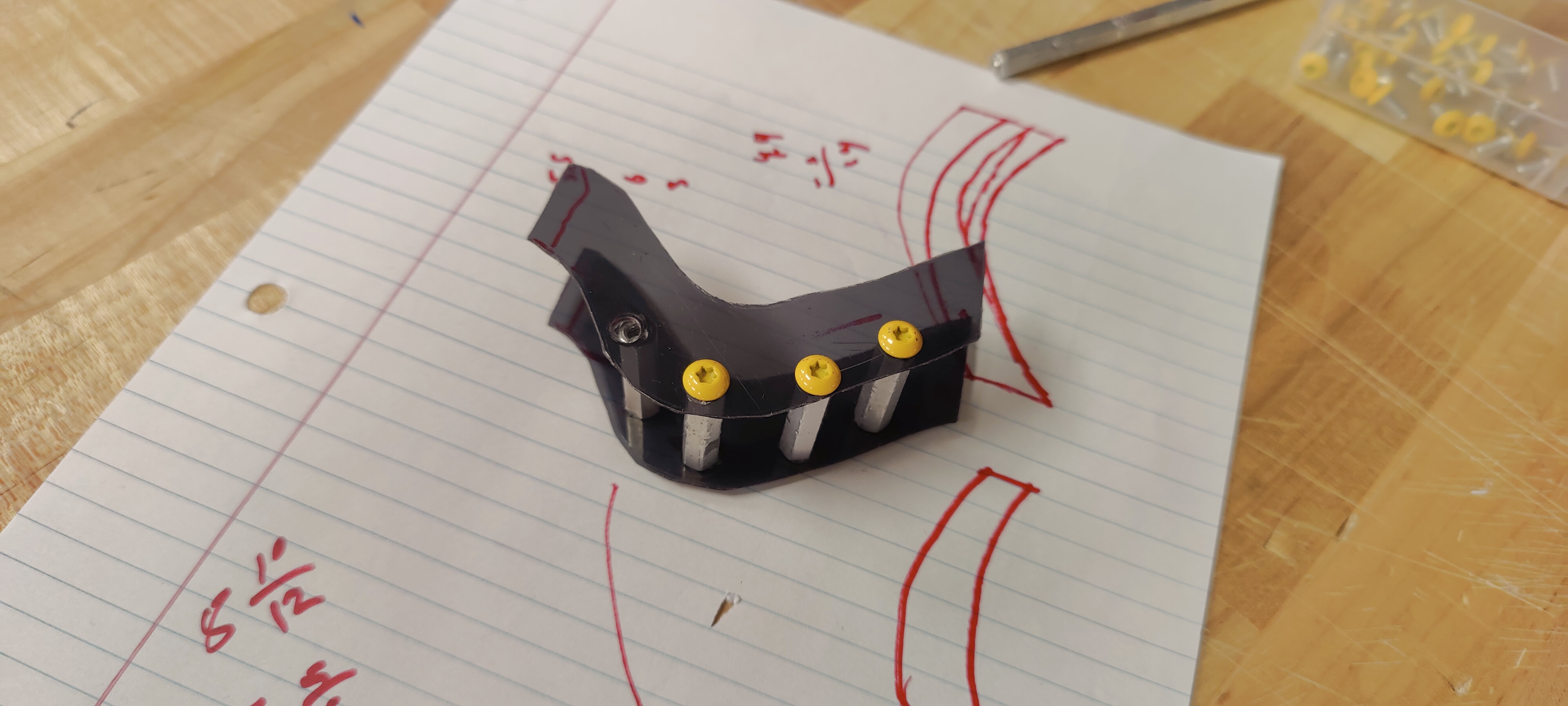
A hand sketch next to the part we made. The design gets more interesting when it leaves the page.
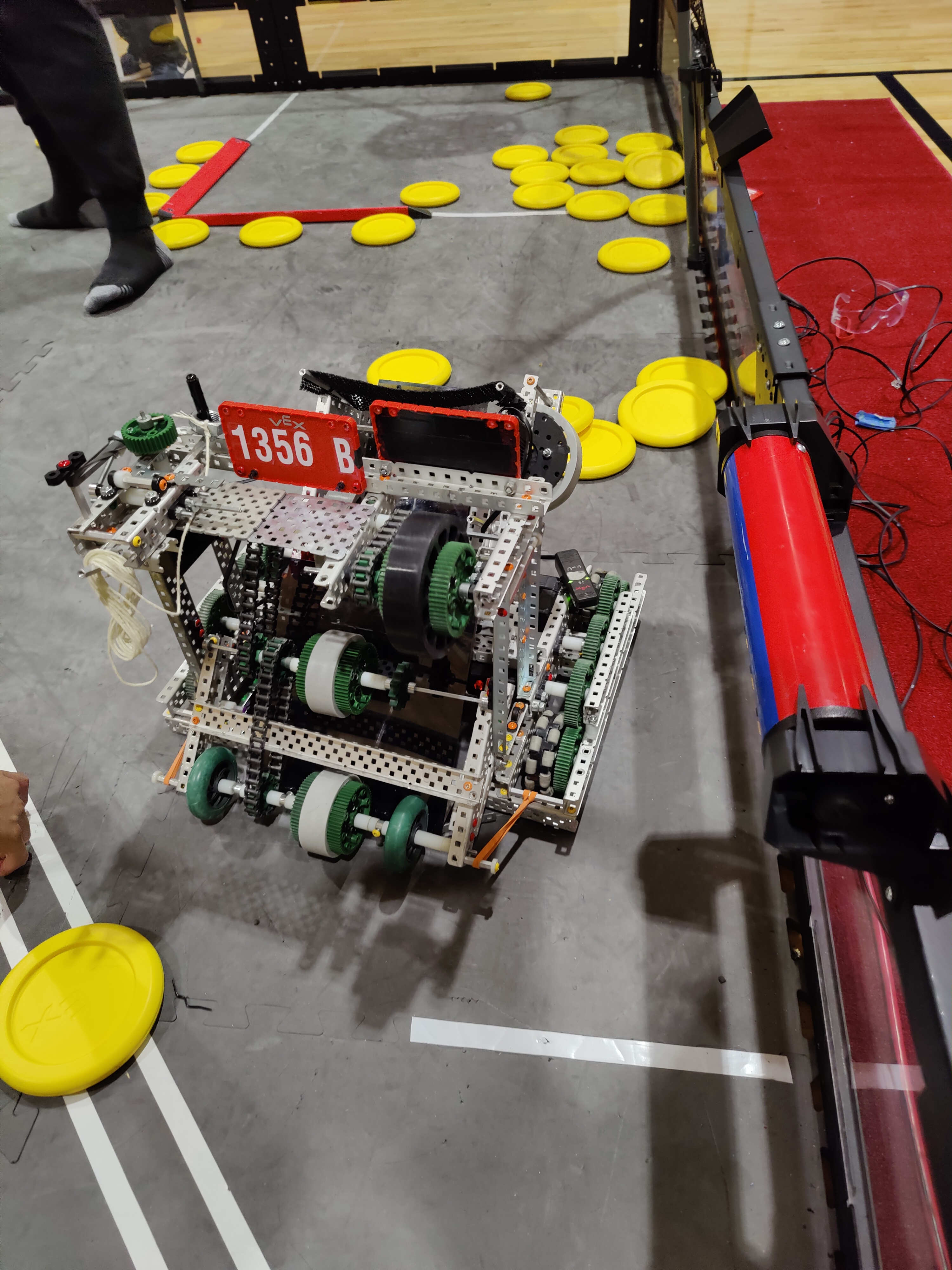
Our 1356B robot among the discs and rollers it was built to handle.
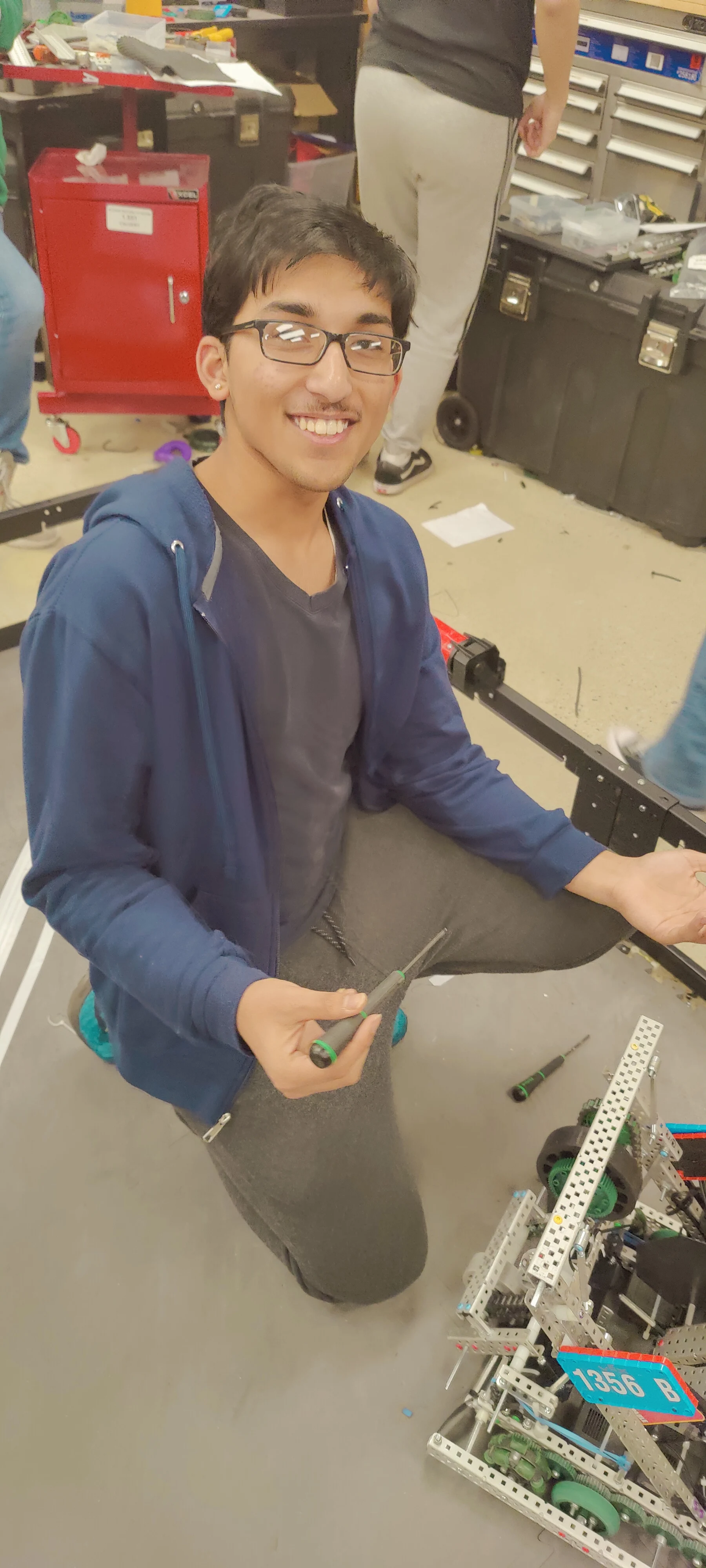
Tools out, robot on the floor. This is the part I love.
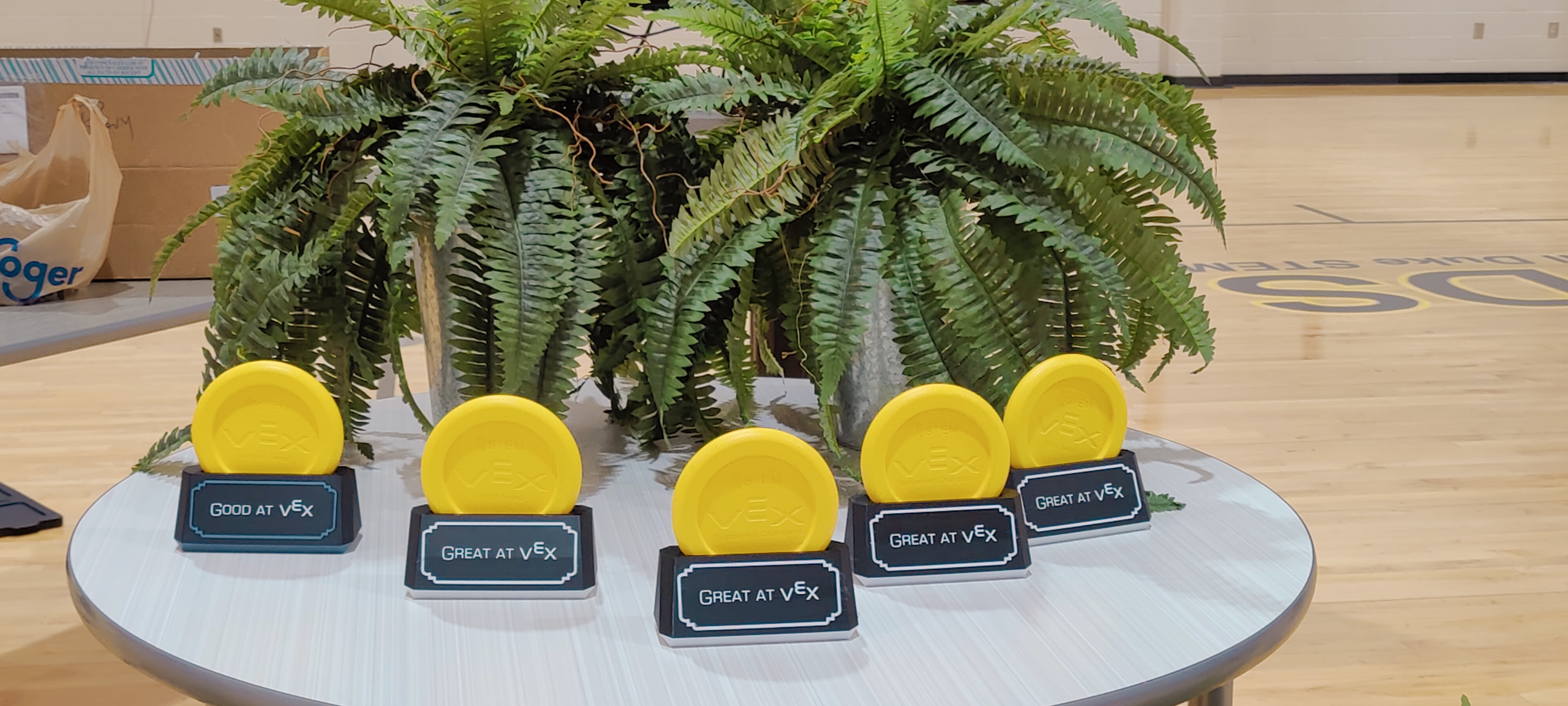
The disc trophies deserve their own photo.
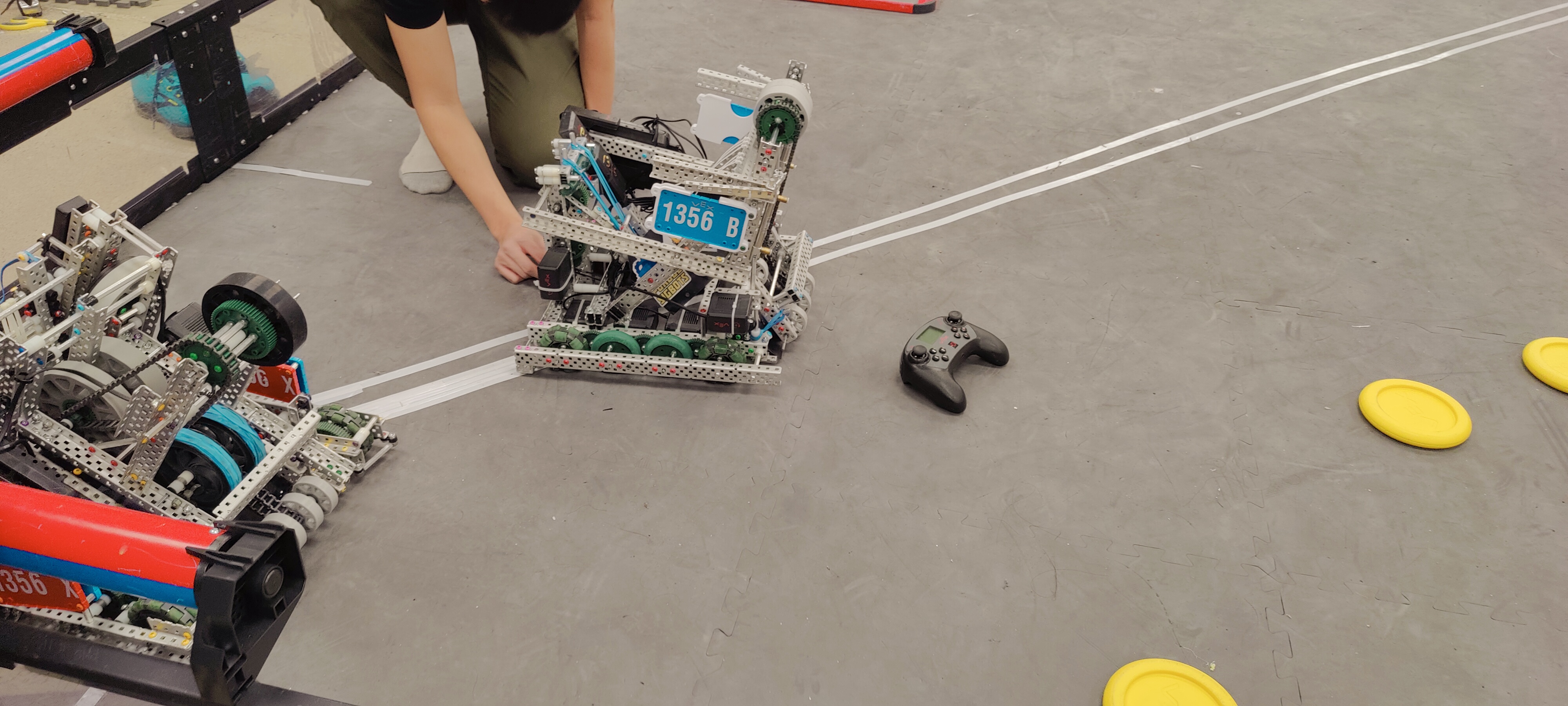
Working on 1356B at the field, with the controller ready for another run.
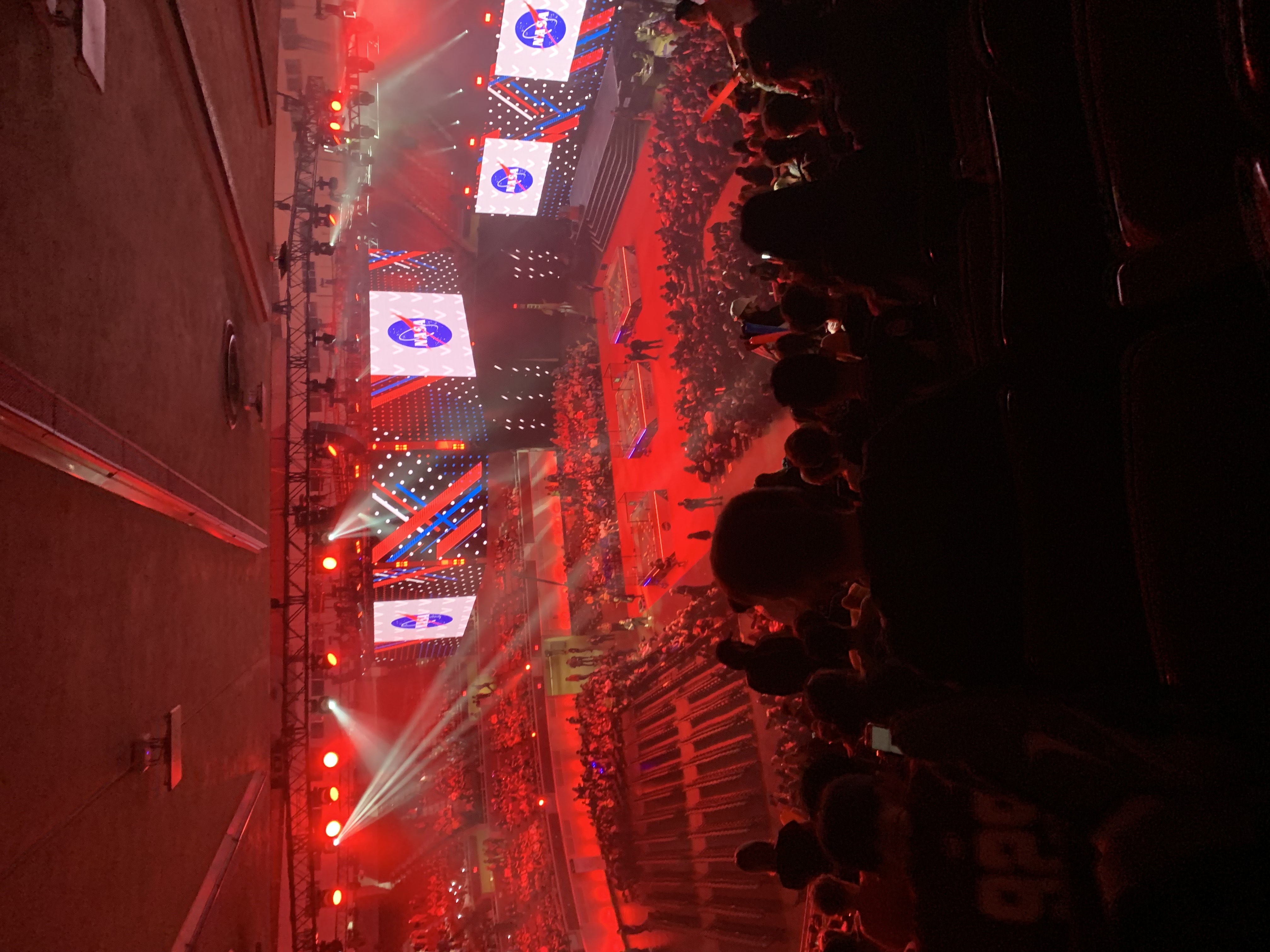
The arena at Worlds. A very different view from our practice field.
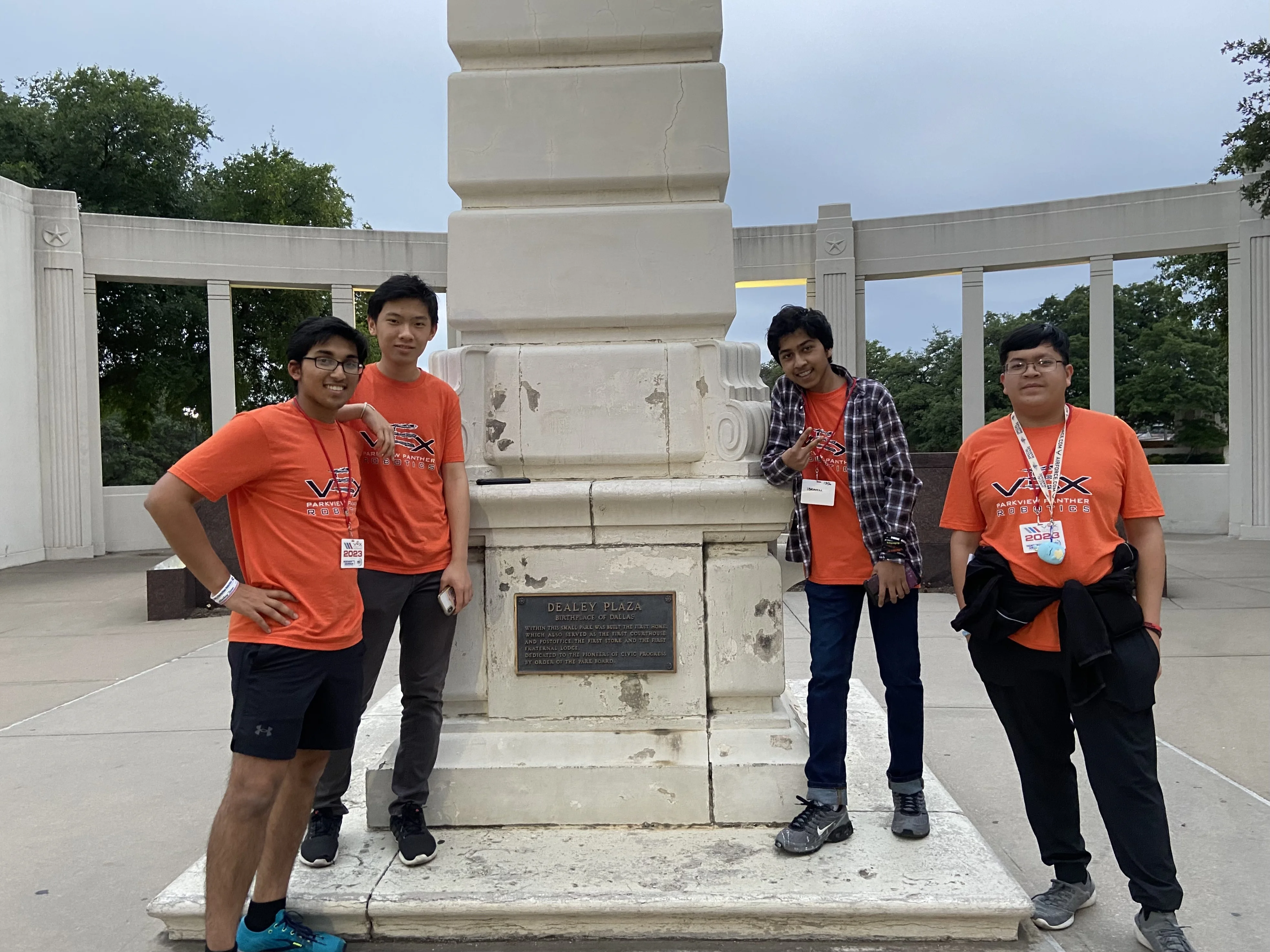
One of my favorite parts of competing: the people I got to do it with.
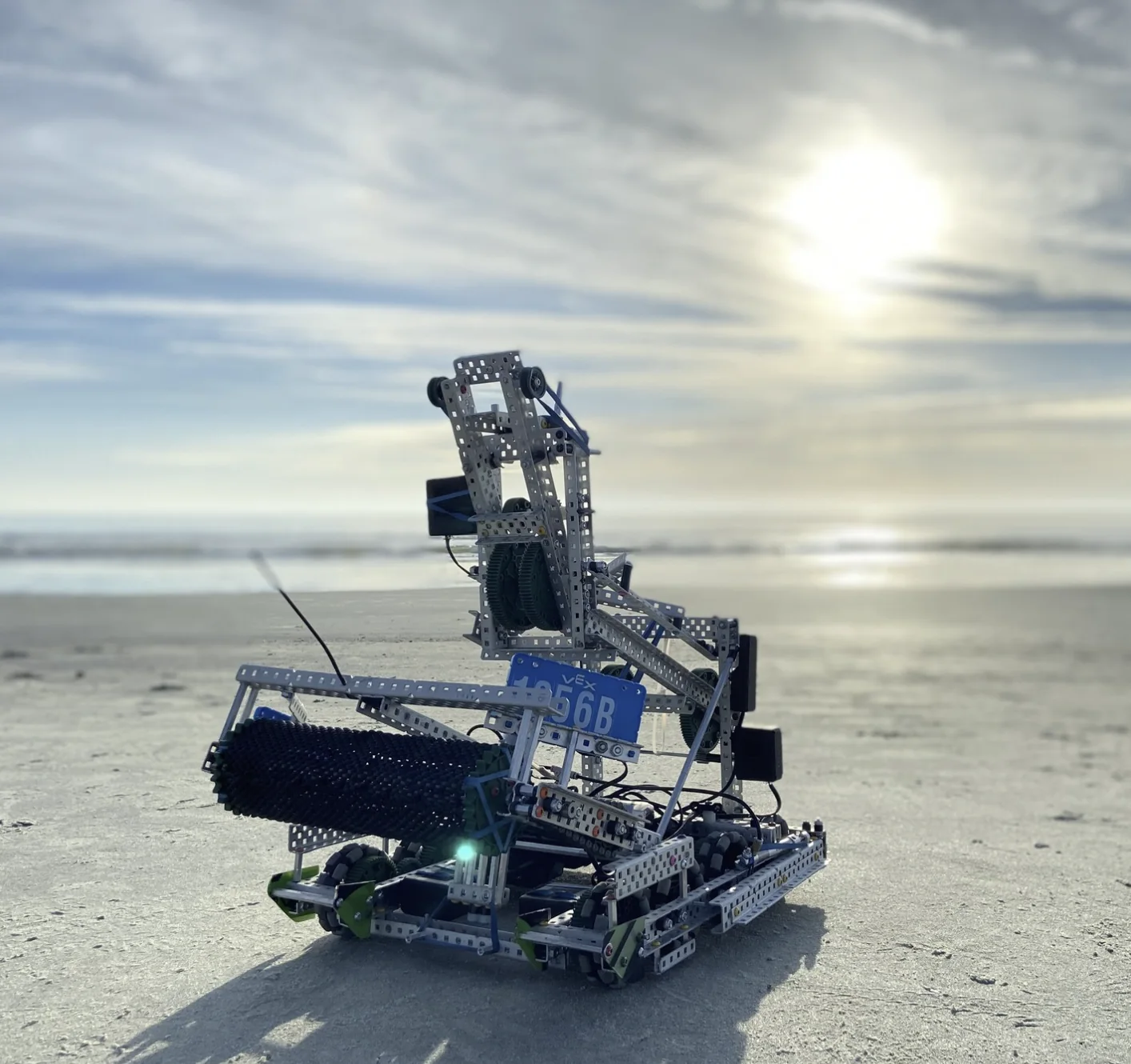
A quiet moment for a machine built for a very loud competition.
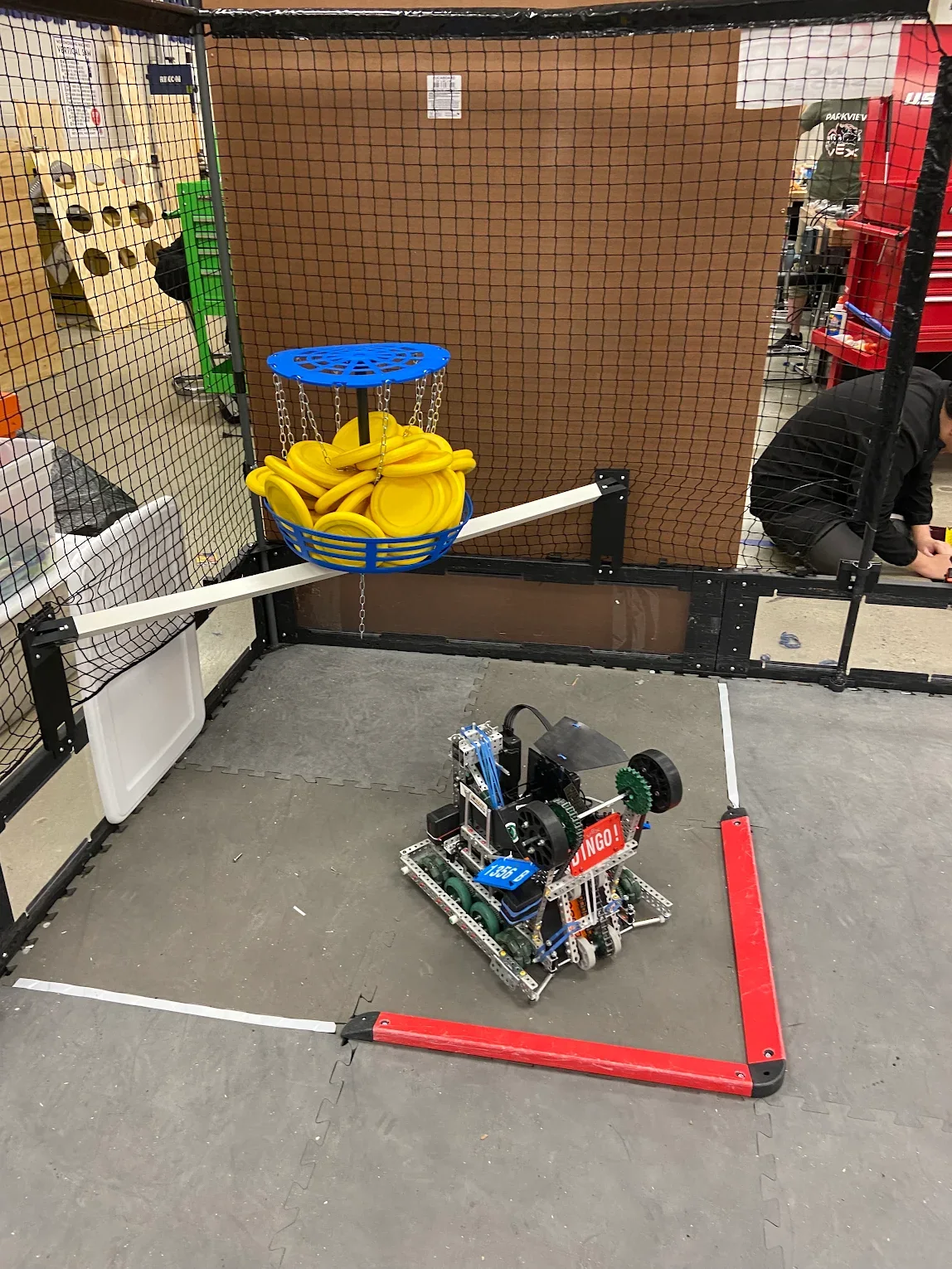
Robot, game pieces, repeat. This is where the next revision starts.
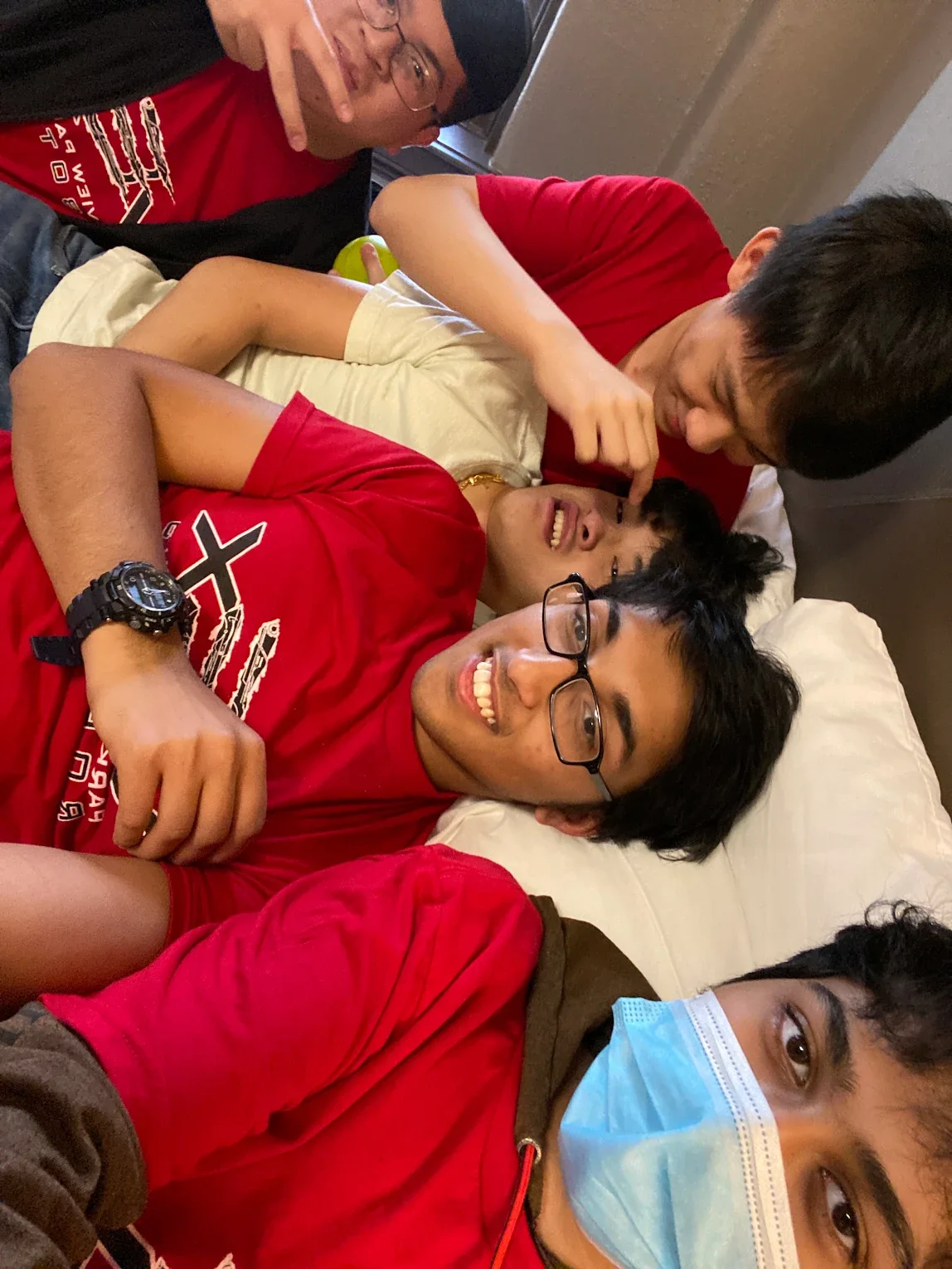
The team behind the robot—and the moments between all the engineering.
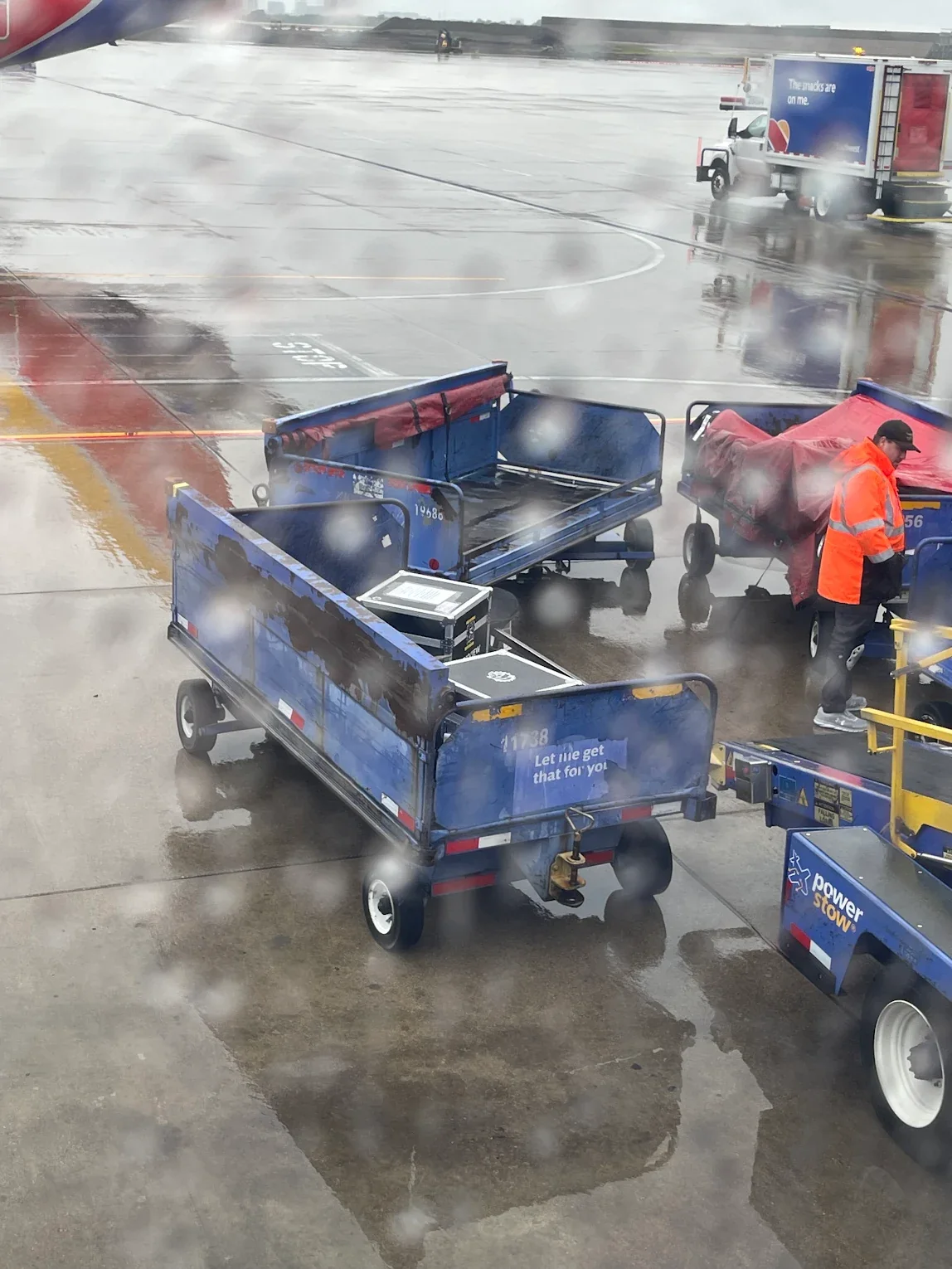
On our way through the airport. It was raining, and seeing our metal robot boxes out there was pretty cool.
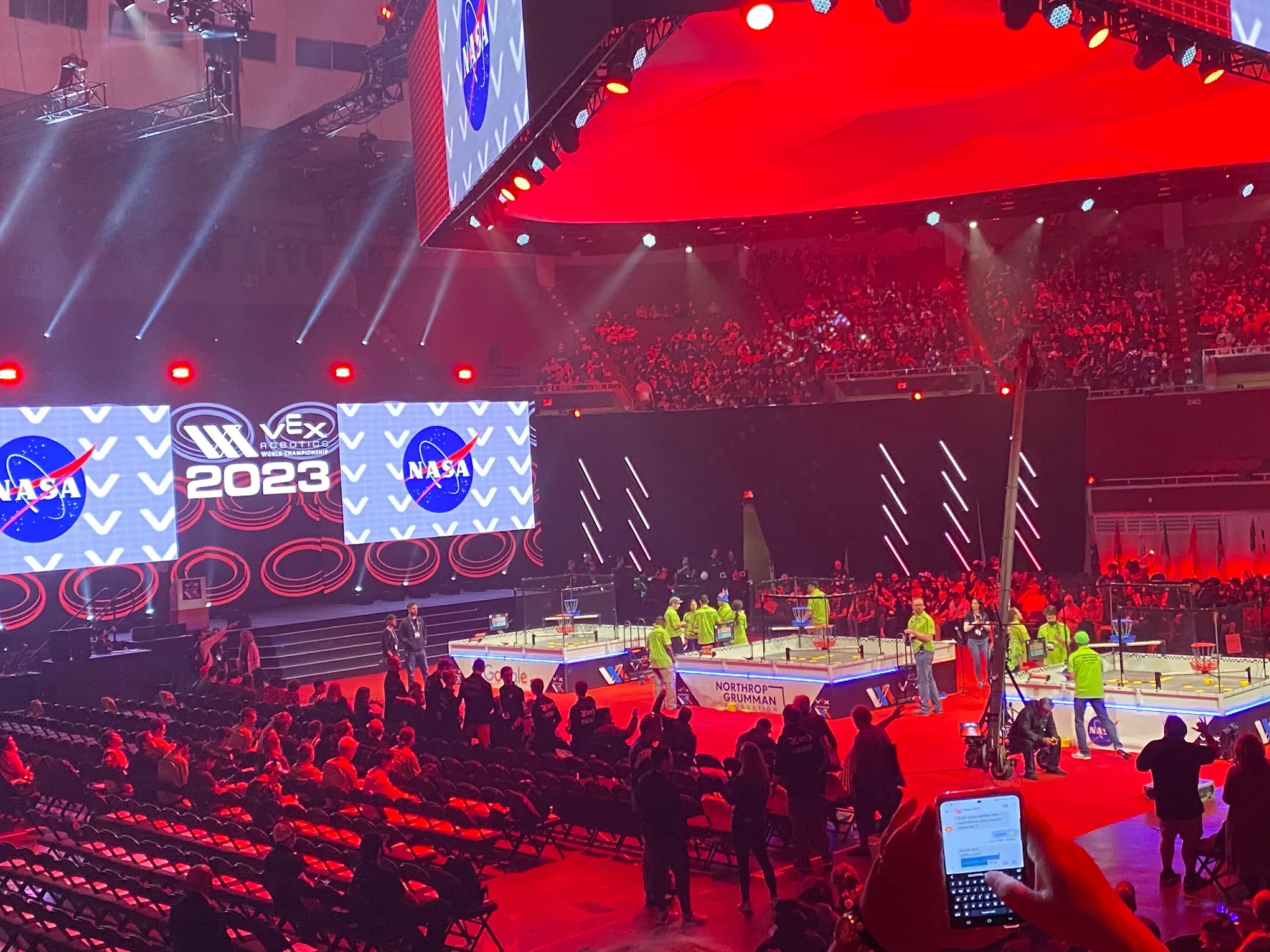
The field, the crowd, the lights. This is what all those hours in the workshop were leading toward.
My part in Team 1356
As a co-captain, I worked on mechanical layout, drivetrain, intake and lift development, and autonomous routines. We built these robots as a team: CAD, fabrication, testing, and redesign all had to come together before match day.
Spin Up: make every disc count
Spin Up pushed us to think about the whole cycle: collecting discs, moving across the field, scoring, and making room for the endgame expansion. A mechanism could look good on its own and still slow down everything around it.
We modeled ideas in CAD, made parts, assembled the robot, and revised what did not work in practice. The photos here show that progression—from a sketch beside a custom part to the complete robot on the field.
Over Under: understand the meta, then build for it
A new game meant a new set of decisions. We studied the approaches teams were converging on—the meta—and worked through what made sense for our robot, our drivers, and our match strategy.
Lift geometry, intake behavior, pneumatic packaging, and autonomous paths were connected choices. Changing one mechanism could affect clearance, balance, or how quickly we could move through a scoring cycle.
When the hardware pushes back
I ran into load-related stalling, stripped gears, and axle instability. That meant looking past the symptom: improving bearing support, reducing unsupported spans, and checking alignment.
The useful question became: what is the simplest change that addresses the actual problem? Building taught me to look at the whole load path, not just the part that failed.
Practice is part of the design
Autonomous routines had to fit the match window and work with the robot we actually had. We revised routes alongside the hardware, using practice and competition to decide what to change next.
That is what I took from VEX: the willingness to rebuild, the discipline to test, and the fun of doing both with a team. And yes, bringing home a trophy feels pretty good.
Continue exploring.
← Back to Selected Builds