Selected work · 09
SafeByte
A camera-equipped wearable prototype connecting a physical scan to a dietary-information interface.
Explore the engineering ↓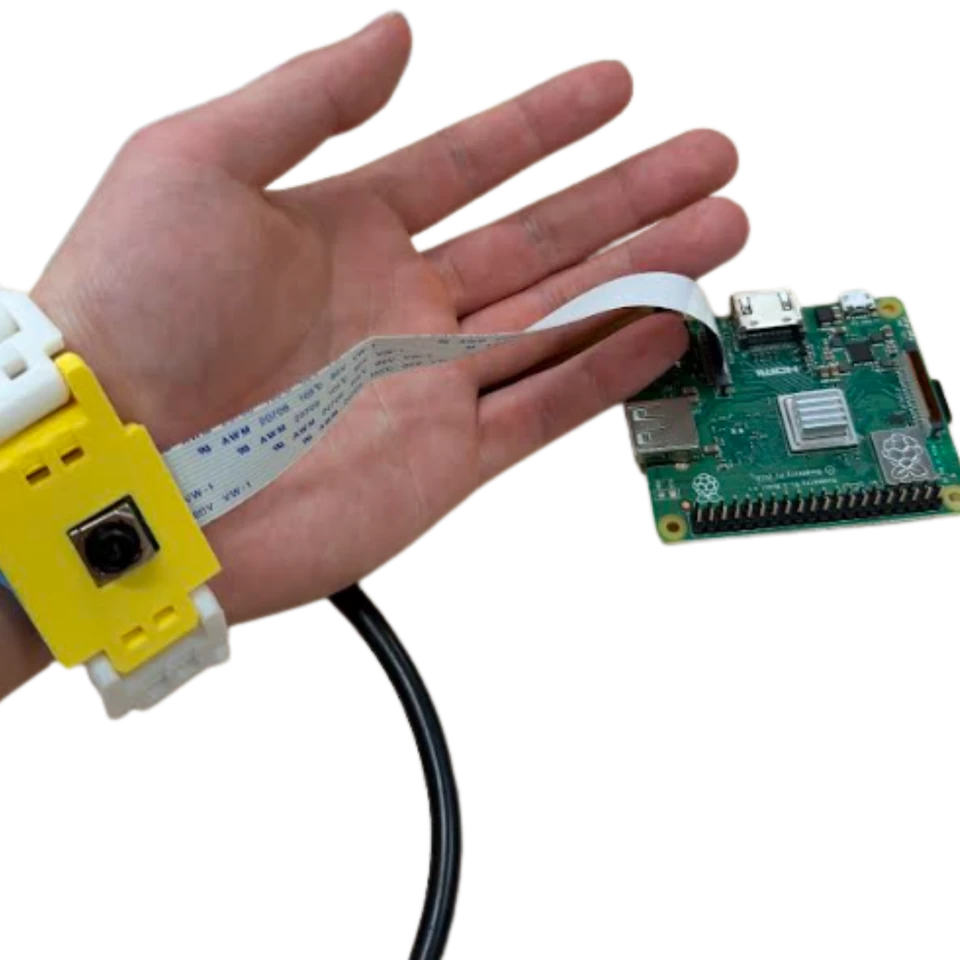
- My role
- Two-person Make-a-thon team · hardware/software integration
- Status
- 24-hour prototype · not a validated dietary safety device
- Focus
- Raspberry Pi · camera · web interface
Result & scope
A bracelet prototype, image-to-information software path, and web interface were produced within the Make-a-thon’s 24-hour window.
- 01
Capture
A bracelet-mounted camera connects physically to a Raspberry Pi.
- 02
Transmit
The prototype sends captured images through an internet connection.
- 03
Interpret
An LLM and public databases provide nutritional information.
- 04
Present
The website exposes scanning and the returned information to the user.
Evidence from the project
Inside the work.
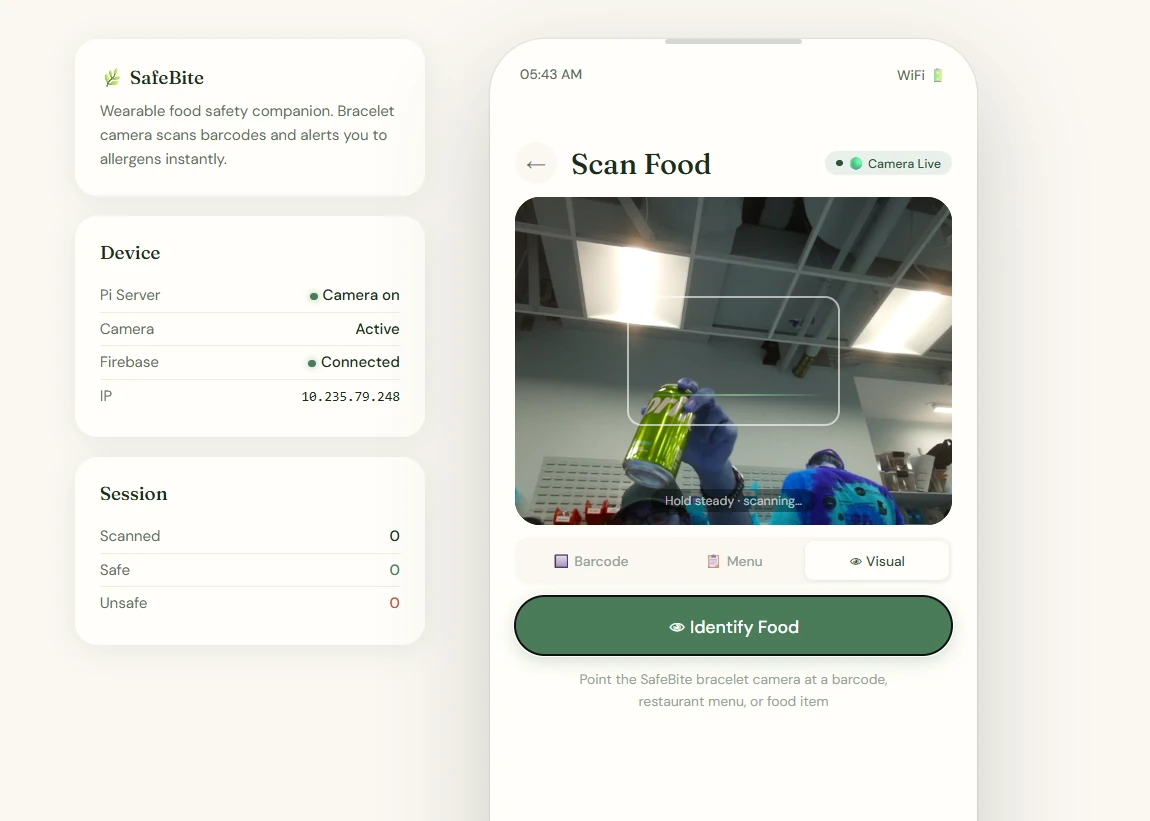
Original image extracted from the team report: device status, live camera view, and scan action.
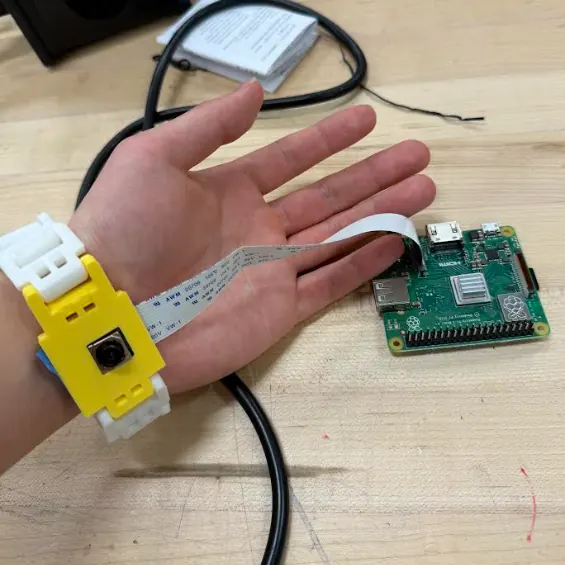
Existing project device photograph, retained alongside the report’s interface evidence.
Recorded demonstration
Prototype walkthrough
The supplied demo shows the prototype interaction; it is not an accuracy or safety benchmark.
Press play to load the video.
| Component | Estimate |
|---|---|
| Bracelet filament | $2–3 |
| Camera | $6–25 |
| Raspberry Pi | $20 |
| Listed component total | $28–48 |
Prototype and contribution
The joint report credits a two-person team and describes wearable hardware, software, and the web interface as sequential development stages. It does not allocate each component to an individual, so these are presented as shared outputs. The original report calls the prototype SafeBite; this portfolio retains the established SafeByte project name.
Integration before miniaturization
The adjustable, 3D-printed bracelet has a camera mount, with a wired connection to the Raspberry Pi. Using an existing computer and camera made an end-to-end prototype possible in the available time; it also leaves size, power, connectivity, and wearability as unresolved constraints.
Costed components
The report estimates $2–3 for bracelet filament, $6–25 for the camera, and $20 for the Raspberry Pi: $28–48 in listed components. This is a prototype component estimate, not a production bill of materials or a retail price. Labor, enclosure finishing, connectivity, and deployment costs are not established.
Demonstration versus validation
The app and video show the interface and prototype interaction. The archive does not establish an ingredient-recognition accuracy benchmark, allergen-detection reliability, latency distribution, or clinical validation. The system should not be relied on to determine whether food is safe for an allergy.
Next iteration
The report proposes a smaller controller, possible Bluetooth connectivity, manufacturing changes, and broader personalization. A useful next technical step is an explicit test set of labels and food packages, with incorrect and uncertain responses retained rather than hidden.
Read the source
Technical records.
About the evidence
Make-A-Thon 2026 Project Write Up and supplied prototype demo. The report uses the name SafeBite; the established portfolio URL and SafeByte title are retained.
Continue exploring.
← Back to Selected Builds